
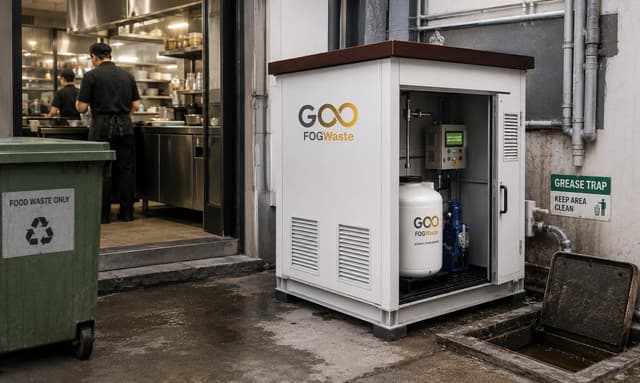
Managing fats, oils, and grease means looking at the whole path: from the source and the grease trap, through the drains, to ongoing operation and care.
The grease trap is one point in a larger system
Scheduled trap cleaning is essential, but problems can migrate downstream when too much FOG leaves the source or when the trap is poorly sized, damaged, or operated outside its design conditions.
Recurring blockages, returning odors, and emergency call-outs should therefore be treated as signals from the whole operating cycle rather than isolated events.
Track cost and warning signs
Record service intervals, cost, removed grease volume, blockage locations, and incident timing, then compare them with production volume or meals served.
- Routine and emergency service spend
- Hours of disruption or reduced capacity
- Locations of odor, backup, or visible deposits
- Changes in menus, processes, or customer volume
Move from reaction to prevention
A stronger approach usually combines source control, trap-condition checks, data-led service intervals, and monitoring of vulnerable drains or downstream points.
The goal is not simply a longer cleaning interval. It is fewer disruptions without shifting the burden elsewhere in the system.
Turn evidence into action
Ask GOO to assess your site information and frame an approach that fits your operation.